12 SEO Optimisation Tools for Rankings, Content and AI Visibility
Twelve SEO optimisation tools compared by job and team size, from free Google tools to content and AI visibility platforms, with clear picks for each type of team.

This list is for teams that already know what SEO is and now need to choose software. That includes founders running marketing alone, content managers with a small writing team, B2B SaaS demand-gen teams and ecommerce brand managers who need product and category pages found.
Each tool was chosen for one practical reason: a small team can sign up and get value from it within a week. The list covers four jobs. The first is measurement, meaning what Google sees and what visitors do. The second is research, meaning keywords, competitors and links. The third is content creation and optimisation. The fourth is AI visibility, meaning whether ChatGPT, Gemini, Claude and Perplexity mention your business.
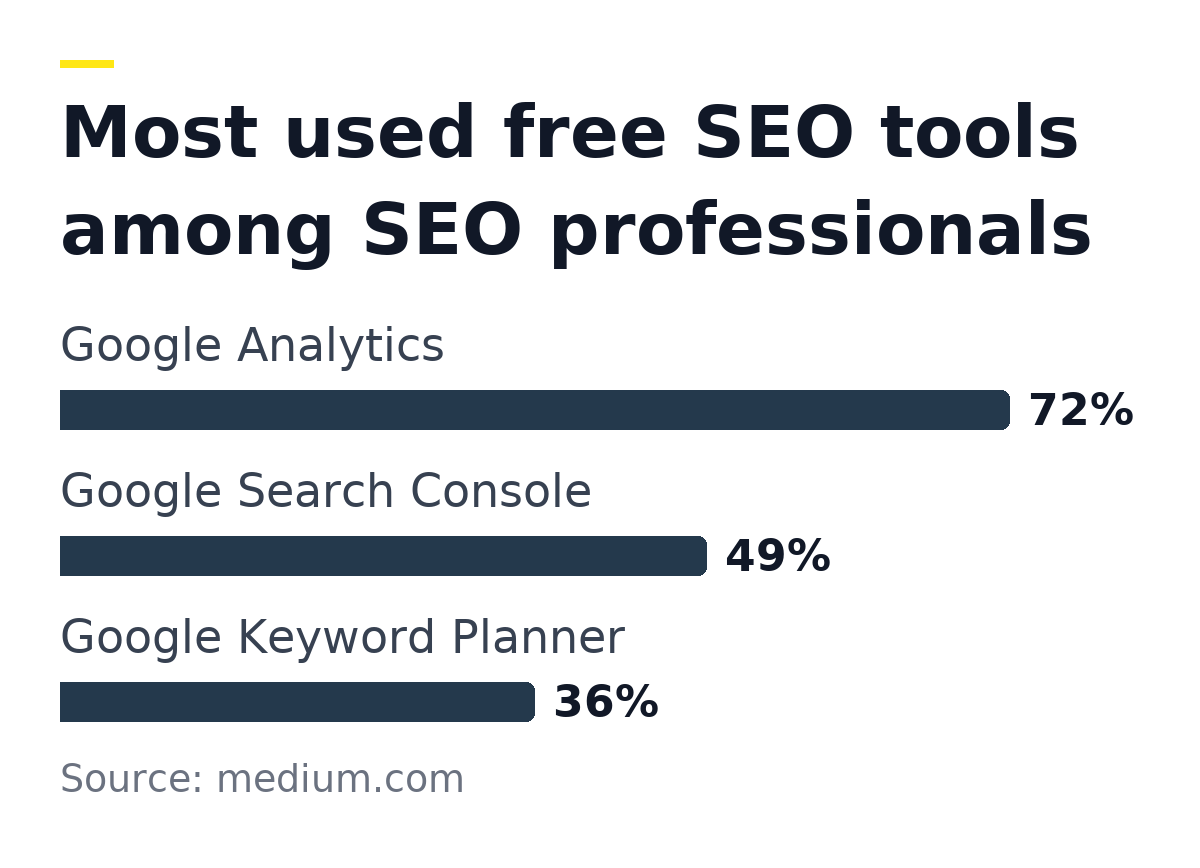
Most teams combine several tools. A 2025 roundup of SEO statistics found that 60% of SEOs use 4–6 tools in combination. The same roundup puts Google Analytics at 72%, Google Search Console at 49% and Google Keyword Planner at 36% among SEO professionals. The free Google tools remain the base layer in 2026, and the paid tools sit on top of them.
The table below sorts the tools by job. Start with the free measurement tools, then add one research suite and one content tool that suits who will do the writing.
| Tool | Main job | Suits |
|---|---|---|
| Google Search Console | Indexing, queries, clicks | Every website owner |
| Google Analytics | Visitor and conversion tracking | Every website owner |
| Semrush | All-in-one SEO and competitor research | Marketing teams running several channels |
| Ahrefs | Backlinks, keywords, site audits | Teams focused on links and content gaps |
| Surfer | On-page content optimisation | Writers improving individual pages |
| Frase | Research briefs and drafts | Content managers producing briefs |
| Jasper | Brand-controlled AI writing | Marketing teams with many content types |
| Writesonic | AI writing plus AI search visibility | Teams wanting writing and GEO in one tool |
| RankAI | Done-for-you AI SEO content | Founders who want hands-off publishing |
| Outrank | Automated article generation and publishing | Small sites that need steady volume |
| Gushwork | AI-assisted, human-managed inbound marketing | Businesses wanting a managed service |
| Telliscope | Researched content for Google and AI assistants | B2B software and ecommerce teams |
If you pick only one tool, start with Google Search Console. It is free, and it shows the actual queries that already bring people to your site. It also shows which pages Google has not indexed. Every paid tool on this list is more useful once you have that data.
Google Search Console
Google Search Console is Google's free report on how your site performs in its search results. It shows impressions, clicks, average position and the queries behind them. It flags pages that are not indexed and explains why. It also lets you submit a sitemap. For a Jaipur furniture brand, it might show that "solid wood study table" brings impressions to a category page that never earns clicks. That points to a title worth rewriting.
- Query and page performance data straight from Google
- Page indexing report with reasons for excluded pages
- Core Web Vitals and mobile usability reports
- URL inspection to request indexing after an update
Best for Every website owner, from a solo founder to an enterprise team. Set it up before you pay for anything else.
Google Analytics
Google Analytics tracks what visitors do after they land on your site. Search Console ends at the click. Analytics picks up from there and shows sessions, engagement, conversions and revenue by channel. For SEO, its main use is showing which organic landing pages lead to demo requests, sign-ups or orders. Visits that never convert tell you little about a page's value.
Best for Teams that need to prove SEO revenue to a founder or finance lead. Ecommerce brands get the most from its purchase tracking.
Semrush
Semrush is an all-in-one marketing suite covering keyword research, competitor analysis, site audits, rank tracking, backlinks and paid search data. Its reach is wide. SEOmator's 2026 comparison reports that Semrush has grown to over 10 million users globally, though 89% use the free plan. That free tier is enough to test it on a few keyword lookups before you commit to a paid plan.
- Keyword research with intent and difficulty estimates
- Competitor domain and keyword gap reports
- Site audit for technical issues
- Position tracking by location, useful for city-level targeting in India
Best for Marketing leads who also run paid search and social and want one suite for competitor research across channels.
Ahrefs
Ahrefs began as a backlink tool and now covers keyword research, content gap analysis, site audits and rank tracking. Its index is large. SEOmator's comparison notes Ahrefs processing 8 billion pages daily. It compares Ahrefs with Semrush and concludes: "you can't go badly wrong with either" on data quality. SEO Scaleup's 2026 usage data counts 54,215 organisations actively using Ahrefs, compared with 24,854 for Semrush.
- Site Explorer for any domain's backlinks and top pages
- Content gap report showing keywords competitors rank for and you do not
- Free Ahrefs Webmaster Tools for your own verified site
Best for SaaS and content teams whose growth depends on links and on finding topics competitors already win. Choose Ahrefs or Semrush, not both, unless you have a specific reason.

Surfer
Surfer is an on-page optimisation tool. You enter a target keyword, and its Content Editor compares your draft with pages that already perform for that term. It suggests terms to cover, a length range and headings. It also has AI writing features and an audit for existing pages. A Pune SaaS team might use it to refresh a pricing comparison page that has slipped in position.
- Content Editor with a live content score
- Audit for existing URLs
- Integrations with Google Docs and WordPress
Best for Writers and editors who produce content in-house and want page-level guidance while they write.
Frase
Frase speeds up content research. It pulls the headings, questions and topics from top-ranking pages into a brief, and an AI writer helps you draft from that brief. It also has optimisation scoring. In its newer positioning, it includes features for visibility in AI search.
Best for Content managers who brief freelancers or junior writers and want consistent, research-backed outlines quickly.
Jasper
Jasper is an AI content platform built for marketing teams. It stores brand voice, style guides and company knowledge, so output across blog posts, emails, ads and product copy sounds consistent. SEO is one use case among many. Jasper leans on integrations, including one with Surfer, for detailed on-page optimisation.
Best for Larger marketing teams that write many content types and care most about brand control across all of them.
Writesonic
Writesonic began as an AI writer and now also positions itself as a GEO platform. It tracks how brands appear in AI assistants and suggests actions to improve that visibility, alongside its article writing and SEO features. That combination suits teams that want both jobs in one subscription.
Best for Marketing teams that want to monitor AI search mentions and produce content from the same tool.
RankAI
RankAI is a done-for-you AI SEO service. It researches competitors, writes and publishes articles, and updates existing pages with little effort from the customer. It positions itself as an alternative to hiring an SEO agency.
Best for Founders who want organic content running in the background and are comfortable with a hands-off approach.
Outrank
Outrank automates article creation and publishing. It finds keywords for your site, generates articles on a schedule and publishes them to your CMS. It also includes a backlink exchange feature.
Best for Small sites and solo founders who need steady publishing volume on a modest budget.
Gushwork
Gushwork combines AI agents with a human marketing team to run inbound programmes, including SEO content and search visibility work. It works more like a managed service than a self-serve tool.
Best for Businesses that want marketing outcomes delivered by a team and do not plan to operate software themselves.
Telliscope
Telliscope publishes this article. Telliscope is a content strategy and automation platform. It researches what buyers ask on Google, ChatGPT, Claude and Perplexity, then writes, publishes and improves website content using the business's own knowledge, called Company DNA. It covers SEO, GEO and AEO. Starter is ₹14,999 per month plus GST. It includes 15 articles per month, up to 10 Company DNA sources, and beta AI visibility tracking for 25 searches across ChatGPT, Gemini, Claude and Perplexity, updated twice a month. Your own team approves each article. Growth is ₹44,999 per month plus GST. It includes 20 articles per month, up to 50 Company DNA sources, 50 tracked searches updated four times a month, human editorial review, custom hero images, infographics, priority support and managed execution. Agencies can contact Telliscope for custom pricing.
Best for B2B software and ecommerce businesses that do good work but are under-discovered, and that want to appear in both Google and AI answers without building a large in-house content team.
Related: What Is SEO and How Does It Work? The Basics for Busy Businesses
Frequently Asked Questions
What is the best SEO service?
The best SEO service depends on who will do the work. If you have writers, a research suite like Semrush or Ahrefs plus an optimisation tool like Surfer or Frase is a common setup. If you want content handled for you, managed options such as RankAI, Gushwork or a managed content platform fit better. Adoption of AI in SEO is now broad: SQ Magazine's AI SEO statistics report that adoption of AI strategy among SEOs rose from 65% in 2024 to 86% in 2025. Judge any service by the leads and orders it brings, not by the number of reports it sends.
Can ChatGPT do SEO?
ChatGPT can help with drafts, outlines and keyword ideas. It cannot see your Search Console data, crawl your site or track rankings and AI mentions over time, so it works alongside the tools above rather than replacing them.
If your business does good work but buyers are not finding it on Google or in AI answers, try Telliscope Starter. Connect your Company DNA sources and review your first researched articles. Then book a Telliscope demo to see which searches your business can win.
Sources
- 🔍 98 Essential SEO Statistics for 2025: Market Share, ROI, Trends & Tools - medium.com
- AI SEO Statistics 2026: Adoption, AI Overviews & LLM Citation Data - sqmagazine.co.uk
- Semrush vs Ahrefs: Complete Comparison Guide 2026 - SEOmator - seomator.com
- SEO Tools Statistics 2026: Usage & Adoption Trends - seoscaleup.com